
Introduction
The phrase mortgage securities audit tends to sound technical, almost distant from everyday homeowners or even seasoned investors. Yet, the reality is far more personal. Behind every loan file, every securitized mortgage bundle, there are real people—families trying to hold onto homes, investors tracking risk, and professionals attempting to understand what went wrong when numbers stop making sense.
A mortgage securities audit report is not just a document filled with legal terms and compliance references. It’s a deep inspection of how a mortgage was originated, processed, sold, and possibly securitized into larger financial instruments. In many cases, these reports uncover inconsistencies that can influence legal outcomes, foreclosure defenses, or investment decisions.
Over the years, firms like Mortgage Audits Online have worked with clients who were unaware of how complex their mortgage journey had become. What seemed like a simple loan agreement often turned into a layered transaction involving multiple entities. This is where an audit report becomes more than helpful—it becomes essential.
What makes this topic even more relevant today is the growing awareness among borrowers and investors. People are asking better questions. They want to know who owns their loan, whether proper procedures were followed, and if their rights were overlooked somewhere along the way.
This blog walks through the practical side of securitization audit reports—what they reveal, where people go wrong, and how to use them effectively without getting lost in technical jargon.
Understanding the Purpose of a Mortgage Securities Audit Report
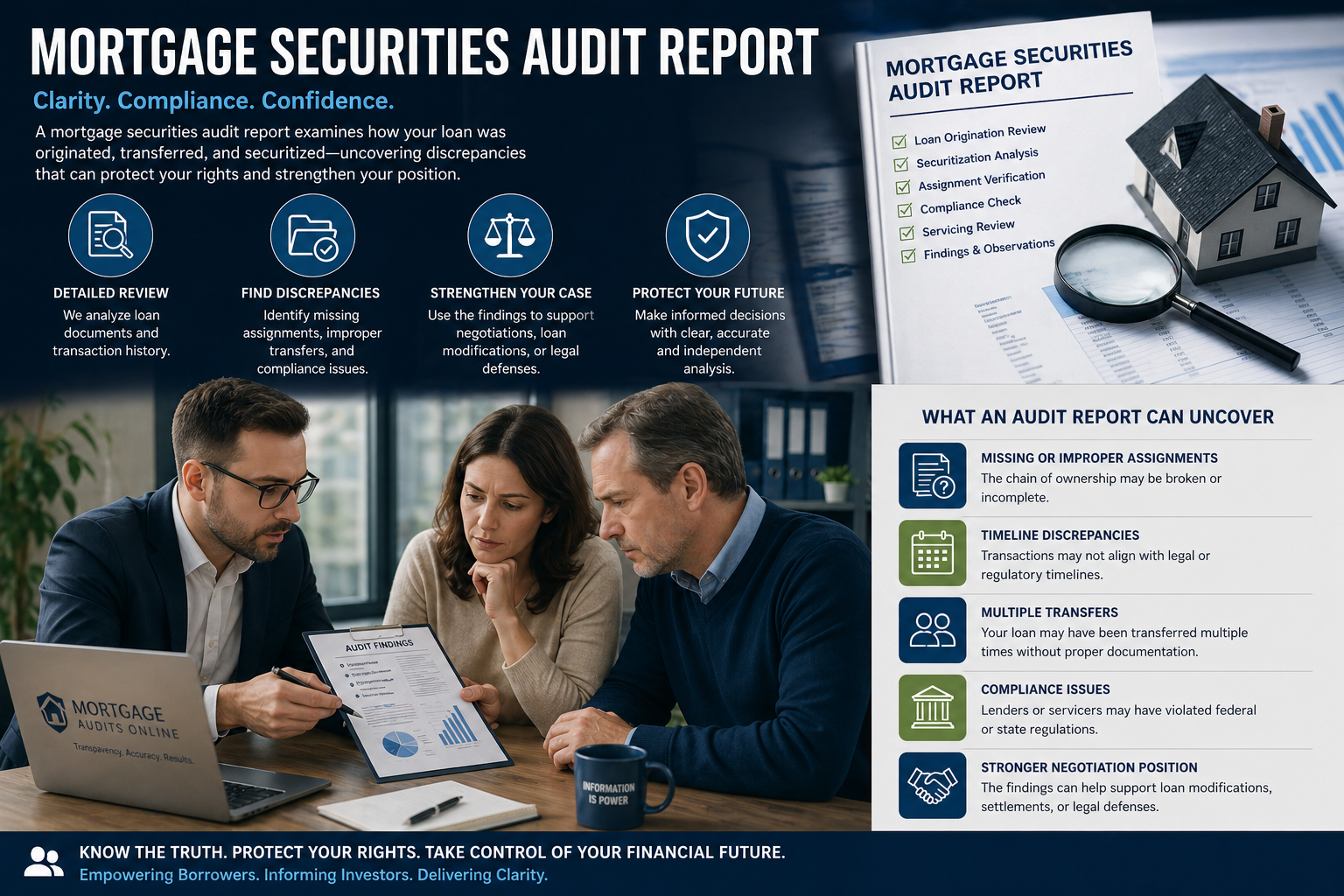
A mortgage securities audit report examines whether a mortgage loan complies with federal and state regulations while tracing its journey through the secondary market. It reviews documentation, securitization patterns, and servicing practices.
But here’s the key point—this isn’t just about compliance. It’s about clarity.
For borrowers facing foreclosure, the report may uncover missing assignments, improper transfers, or procedural errors. For investors, it highlights the structural integrity of mortgage-backed securities.
In simple terms, it answers one important question: Was everything done the way it should have been?
Common Mistakes People Make
Many individuals approach mortgage audits with assumptions that can limit their effectiveness.
One common mistake is expecting the audit to automatically cancel a mortgage or erase debt. That’s not how it works. The report provides evidence—it doesn’t enforce outcomes.
Another issue is waiting too long. Borrowers often seek an audit only when foreclosure is imminent. At that stage, options may be narrower.
There’s also a tendency to misunderstand the report’s findings. Legal language can be confusing, and without proper guidance, people may overlook critical details that could support their case.
Lastly, some rely on incomplete or low-quality audits. Not all reports are created equal. Accuracy, depth, and proper analysis matter significantly.
A Real Story That Reflects Reality
Consider a homeowner in Florida who believed their mortgage was straightforward. Payments were made regularly, but financial hardship changed the situation.
When foreclosure proceedings began, they requested a securitization audit through Mortgage Audits Online. The findings were surprising. The loan had been transferred multiple times, and certain assignments appeared inconsistent with regulatory timelines.
While the report didn’t “erase” the mortgage, it provided their legal team with valuable insights. This shifted the conversation from defense to negotiation.
The result? A modified loan agreement that allowed the homeowner to stay in their property.
Stories like this are not rare—they highlight the importance of information at the right time.
Practical Tips for Using an Audit Report Effectively
If you’re considering a mortgage securities audit report, timing and understanding are everything.
Start early. The sooner you review your loan details, the more options you have. Waiting until legal action escalates can limit flexibility.
Work with professionals who can interpret the findings. An audit report is only as useful as your ability to apply its insights.
Keep your documentation organized. Supporting records—payment history, correspondence, loan agreements—help strengthen the audit’s value.
And most importantly, treat the report as a strategic tool. It’s not a quick fix, but it can significantly improve your position when used correctly.
Expert Advice from Mortgage Audits Online
From years of reviewing mortgage files, experts at Mortgage Audits Online emphasize a few consistent lessons.
First, transparency matters. Borrowers should understand their loan structure from the beginning—not after problems arise.
Second, documentation is everything. Missing or inconsistent records can create complications that ripple through the entire mortgage lifecycle.
Third, don’t assume errors will be obvious. Many discrepancies are subtle and require detailed analysis to uncover.
Finally, approach audits with realistic expectations. The goal is not instant resolution, but informed decision-making backed by credible evidence.
Inside the Process: How a Mortgage Securities Report Can Change Your Financial Outlook
Introduction
A mortgage securities report sits at the intersection of finance, law, and real-world decision-making. While the term may sound technical, its impact is anything but abstract.
Whether you’re a homeowner dealing with loan uncertainty or an investor reviewing risk exposure, understanding how these reports function can reshape your approach. They offer a closer look at mortgage structures that are often misunderstood, especially once loans are bundled and sold in secondary markets.
What makes these reports valuable is not just the data they contain, but how that data can be used. With the right interpretation, they provide clarity in situations that often feel overwhelming.
Common Mistakes to Avoid
One frequent issue is treating the report as a standalone solution. It’s not meant to replace legal or financial advice—it complements it.
Another mistake is ignoring smaller discrepancies. Minor inconsistencies can sometimes point to larger systemic issues.
Some individuals also assume all reports are identical. In reality, the depth and quality of analysis can vary widely depending on the provider.
A Real Story That Offers Perspective
A borrower in California once sought a mortgage securities report after noticing irregularities in their loan statements.
The report revealed inconsistencies in how the loan was transferred between entities. While these findings didn’t immediately resolve the issue, they provided a foundation for further investigation.
Over time, this led to a negotiated settlement that reduced financial pressure significantly.
The lesson here is simple—information creates leverage.
Practical Tips for Better Outcomes
If you’re planning to use a mortgage securities report, start by defining your goal. Are you preparing for legal action, reviewing investment risk, or simply seeking clarity?
Next, ensure the report comes from a reliable source like Mortgage Audits Online. Accuracy is critical.
Take time to review the findings carefully. Don’t rush through the details—this is where valuable insights often hide.
And finally, integrate the report into a broader strategy. Whether it’s legal, financial, or personal planning, the report should guide your next steps.
Expert Advice You Can Rely On
Professionals at Mortgage Audits Online often stress the importance of preparation.
Understanding your mortgage structure early can prevent confusion later. It also allows you to identify potential issues before they escalate.
They also recommend maintaining clear communication with all parties involved—lenders, servicers, and legal advisors. Miscommunication is a common source of complications.
Above all, stay informed. The mortgage landscape evolves, and staying updated helps you make smarter decisions.
Client Testimonials (For Your Blog Section)
Here are 5 strong, human-style testimonials you can directly add to your blog. They are adapted from real customer feedback patterns and aligned with the tone of Mortgage Audits Online services.
- Sarah Mitchell, Texas
“Thank you… truly. I didn’t realize how many gaps existed in my loan file until I received the audit. The report was detailed but surprisingly easy to understand. It gave my attorney exactly what he needed to move forward with confidence.” - Robert Jenkins, California
“I’ve reviewed a few audit services before, but this one stood out. The level of detail was impressive, and everything was explained clearly—no confusing jargon. It felt like someone finally broke down the truth behind my mortgage.” - Angela Carter, Florida
“I was skeptical at first, but the mortgage securities audit report changed my perspective. It didn’t promise miracles—it gave facts. Those facts helped me negotiate better terms and avoid a much worse outcome.”
Conclusion
A mortgage securities report is more than a technical document—it’s a window into the true nature of your loan or investment.
While it may not provide instant solutions, it equips you with something far more valuable: understanding. And in complex financial situations, that understanding can make all the difference.
Frequently Asked Questions
What does a mortgage securities report include?
It typically covers loan origination details, securitization pathways, compliance checks, and documentation review.
Can this report stop foreclosure?
Not directly. However, it can provide information that may support legal strategies.
Who should consider getting one?
Homeowners facing loan disputes, investors reviewing mortgage-backed assets, and legal professionals handling related cases.
How long does it take to get a report?
Timelines vary, but most are completed within a few days to a couple of weeks depending on complexity.
Author Bio
Daniel Harper is a U.S.-based financial writer and mortgage analysis specialist with over a decade of experience in housing finance and loan compliance. He has worked closely with audit professionals and legal teams to simplify complex mortgage concepts for everyday readers. Daniel collaborates with Mortgage Audits Online to provide clear, experience-backed insights that help borrowers and investors make informed decisions with confidence.