
Introduction
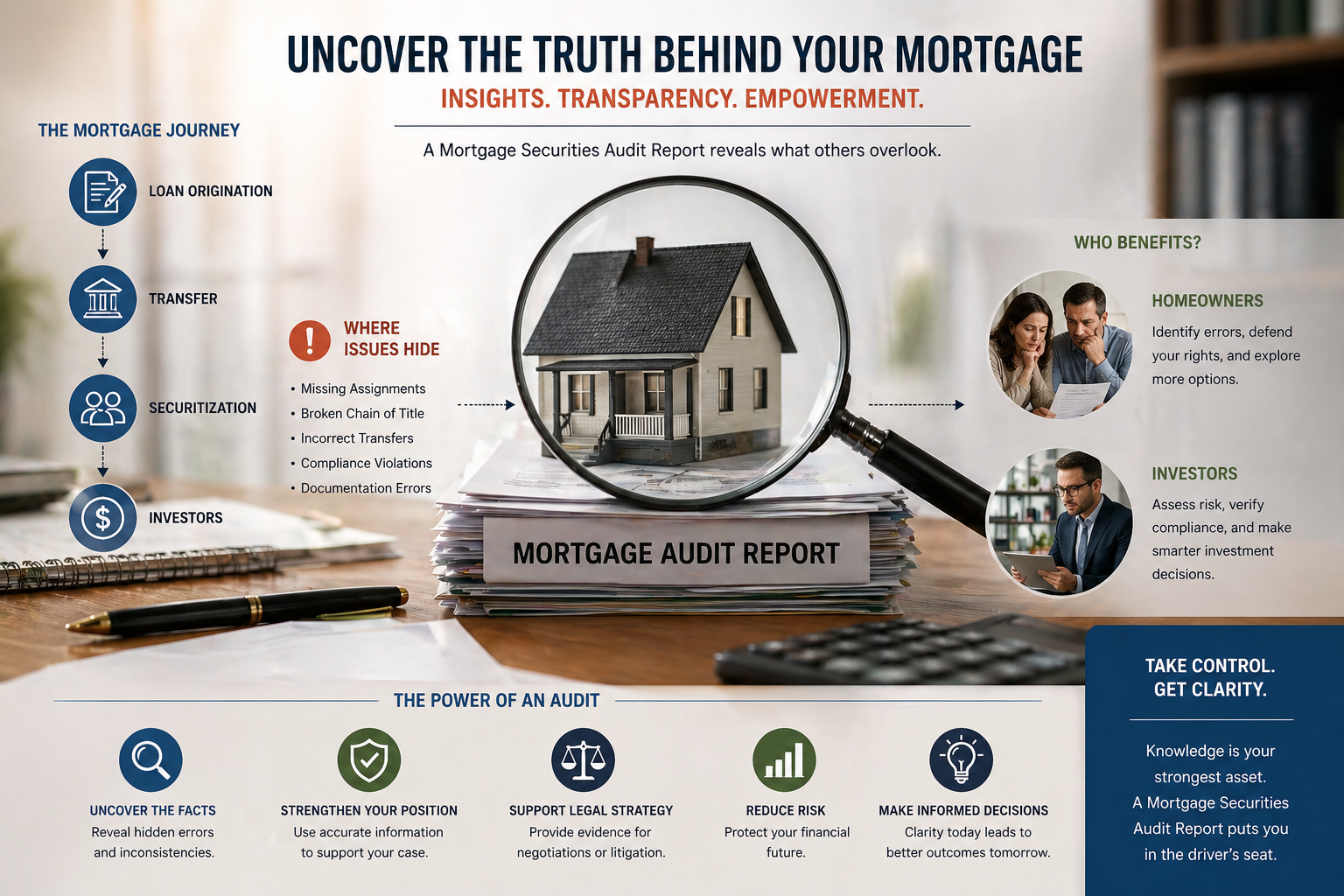
Mortgage-backed securities have long been a cornerstone of the financial market, offering investors a way to earn steady returns from pools of home loans. Yet, beneath their structured appearance lies a complex system that demands careful scrutiny. The Mortgage Securities Audit Report steps into this space with a purpose: to uncover inconsistencies, verify compliance, and provide clarity in an area often clouded by technical jargon and layered transactions.
For many investors, trustees, and even borrowers, audit reports can feel dense and inaccessible. But when read closely, they tell a compelling story—one about risk exposure, documentation gaps, servicing practices, and the true health of mortgage-backed assets. The report does more than present figures; it raises questions about how loans were originated, packaged, and managed over time.
In recent years, growing awareness around transparency and accountability has pushed audit reports into the spotlight. Investors no longer rely solely on credit ratings or summaries. They want evidence. They want assurance that the assets backing their investments are properly documented and legally sound. This is where the audit report becomes valuable—not just as a technical document, but as a decision-making tool.
This article breaks down the essence of the audit report in a way that is practical, readable, and grounded in real-world application. Whether you are an investor reviewing your portfolio or someone trying to understand how mortgage securities operate behind the scenes, this guide will help you interpret the findings and act with confidence.
What the Mortgage Securities Audit Report Examines
At its core, the audit report reviews mortgage-backed securities to ensure that everything aligns with the original agreements and regulatory expectations. It looks beyond surface-level data and digs into the structure of loan pools.
One of its primary focuses is loan file integrity. This includes verifying whether essential documents—like promissory notes, mortgage deeds, and assignments—are complete and properly recorded. Missing or flawed documentation can raise serious legal concerns, especially during foreclosure proceedings.
Another key area is servicing compliance. Mortgage servicers are responsible for collecting payments, managing escrow accounts, and communicating with borrowers. The audit evaluates whether these duties are carried out in accordance with servicing agreements.
The report also assesses cash flow accuracy, ensuring that payments from borrowers are distributed correctly to investors. Even minor discrepancies can affect returns over time.
Why This Audit Matters More Than Ever
Financial markets have evolved, but the lessons from past crises still linger. One of the biggest takeaways has been the importance of transparency. Investors now recognize that even highly rated securities can carry hidden risks.
The Mortgage Securities Audit Report acts as a safeguard. It helps identify issues early—before they escalate into larger financial or legal problems. For institutional investors, this can mean protecting millions in capital. For individual stakeholders, it provides peace of mind.
Another reason this audit holds significance is its role in litigation support. In cases where disputes arise, the findings of a detailed audit can serve as credible evidence.
Common Mistakes Investors Make When Reviewing Audit Reports
Overlooking Documentation Gaps
Many investors focus only on financial performance and ignore documentation issues. However, incomplete loan files can undermine the enforceability of mortgages.
Misinterpreting Technical Language
Audit reports often use specialized terminology. Misreading these terms can lead to incorrect conclusions about risk levels.
Ignoring Servicing Irregularities
Servicing errors—such as misapplied payments or delayed reporting—may seem minor but can accumulate into significant discrepancies.
Relying Solely on Summaries
Executive summaries provide a quick overview, but they don’t capture the full picture. Important findings are often buried deeper in the report.
A Real Story: When an Audit Changed the Outcome
A mid-sized investment firm once held a portfolio of mortgage-backed securities that appeared stable on paper. Returns were consistent, and there were no immediate warning signs. However, after commissioning a detailed audit similar to the report, several issues surfaced.
The audit revealed that a portion of the underlying loans lacked proper assignment documentation. This meant that, in the event of borrower default, the firm could face challenges in enforcing its claims.
Armed with this insight, the firm took proactive steps. It renegotiated certain positions, reduced exposure to high-risk segments, and strengthened its due diligence process. What could have turned into a costly legal battle instead became a manageable adjustment.
This example highlights how an audit is not just a formality—it can directly influence financial outcomes.
Practical Tips for Using the Audit Report Effectively
Read Beyond the Numbers
Focus on narrative sections that explain findings. These often provide context that raw data cannot.
Cross-Check Key Findings
If the report flags discrepancies, compare them with original agreements and servicing records.
Engage Professionals When Needed
Legal and financial experts can help interpret complex sections, especially those related to compliance and enforceability.
Track Patterns, Not Just Isolated Issues
Repeated inconsistencies may indicate systemic problems rather than one-off errors.
Expert Advice: How to Approach Mortgage Securities Audits
Experienced analysts suggest treating audit reports as part of an ongoing review process rather than a one-time exercise. Markets shift, servicing practices evolve, and regulations change. Regular audits help maintain alignment with current standards.
Another important perspective is to prioritize risk over return when interpreting findings. A high-yield investment may look attractive, but unresolved audit issues can outweigh potential gains.
Experts also recommend maintaining a document trail. Keeping organized records of audit findings, responses, and corrective actions ensures accountability and simplifies future reviews.
Finally, collaboration plays a crucial role. Investors, auditors, and servicers should work together to address identified issues. A cooperative approach often leads to faster and more effective resolutions.
Strengthening Trust Through Transparency
One of the most valuable outcomes of the Mortgage Securities Audit Report is the trust it builds. Transparency is not just about compliance—it’s about credibility. When investors have access to detailed, accurate information, they are better equipped to make informed decisions.
This transparency also benefits the broader financial ecosystem. It encourages higher standards, reduces uncertainty, and promotes responsible practices across the industry.
The Report is more than a document
The Mortgage Securities Audit Report is more than a technical document—it is a lens through which investors can view the true condition of their assets. By examining documentation, servicing practices, and financial flows, it uncovers details that might otherwise go unnoticed.
Understanding this report requires patience and attention, but the effort pays off. It empowers investors to identify risks, take corrective action, and strengthen their portfolios. In a market where complexity is the norm, clarity becomes a powerful advantage.
Rather than treating audits as routine paperwork, they should be seen as strategic tools. When used effectively, they not only protect investments but also enhance confidence in the decisions that shape financial futures.
Smarter Use of Mortgage Audit Reports for Better Decisions
Common Mistakes Investors Still Make
Even with access to detailed audit reports, many investors fall into patterns that quietly erode their returns. One frequent misstep is treating the audit as a checklist rather than a diagnostic tool. The audit framework is designed to reveal underlying weaknesses, not just confirm surface-level compliance. When readers skim for “pass/fail” indicators, they miss the deeper implications.
Another issue is overconfidence in historical performance. Investors often assume that a security performing well in the past will continue to do so. However, the audit frequently uncovers documentation defects or servicing inconsistencies that were not immediately visible in earlier reporting cycles. Ignoring these signals can lead to delayed but significant financial exposure.
A third mistake is failing to act on findings. It’s surprisingly common for stakeholders to review an audit, acknowledge its conclusions, and then take no meaningful action. Whether due to complexity or hesitation, this inaction can turn manageable risks into larger problems.
Finally, many underestimate the importance of aligning audit insights with legal strategy. Documentation gaps, for instance, are not just technical flaws—they can affect enforceability in court. Recognizing this connection is essential for long-term protection.
A Real Story: How Audit Findings Prevented a Costly Loss
A private investment group managing a diverse mortgage portfolio decided to engage Mortgage Audits Online for a detailed-style audit review. On paper, their holdings appeared stable, with consistent income streams and low default rates.
However, the audit revealed a pattern that had gone unnoticed. Several loans within the pool had incomplete assignment chains, meaning the legal transfer of ownership was not fully documented. While borrowers were still making payments, the issue posed a serious risk if defaults occurred.
Instead of waiting for problems to surface, the firm took immediate steps. They restructured parts of their portfolio, negotiated adjustments with counterparties, and initiated corrective documentation processes where possible. Within months, they had significantly reduced their exposure.
What stands out in this case is not just the discovery of the issue, but the timing. Without the audit approach, these gaps might have remained hidden until enforcement was required—at which point options would have been limited and losses more likely.
Practical Tips for Getting More Value from Audit Reports
Start by reading the report in layers. The executive summary offers direction, but the real value lies in the detailed sections. Focus on areas where the audit highlights repeated inconsistencies—these often signal systemic issues rather than isolated errors.
Create a simple tracking system for findings. Whether it’s a spreadsheet or internal dashboard, documenting each issue, its severity, and the action taken can make a significant difference over time. This habit turns audit reviews into a structured process rather than a one-off exercise.
It’s also wise to prioritize issues based on impact. Not every discrepancy carries the same weight. Missing signatures or clerical errors may be less urgent than broken chains of title or servicing violations. Understanding this hierarchy helps allocate time and resources effectively.
Another practical step is to involve cross-functional teams. Legal advisors, compliance officers, and financial analysts each bring a different perspective. When they review audit findings together, the result is often a more balanced and actionable response.
Author’s Bio
The author is a financial content specialist with extensive experience in mortgage-backed securities, compliance analysis, and investment research. Over the years, they have worked closely with audit professionals, legal advisors, and institutional investors to translate complex financial data into clear, actionable insights. Their writing focuses on bridging the gap between technical reports and practical understanding, helping readers navigate intricate financial landscapes with confidence.